
Diptek Pulse
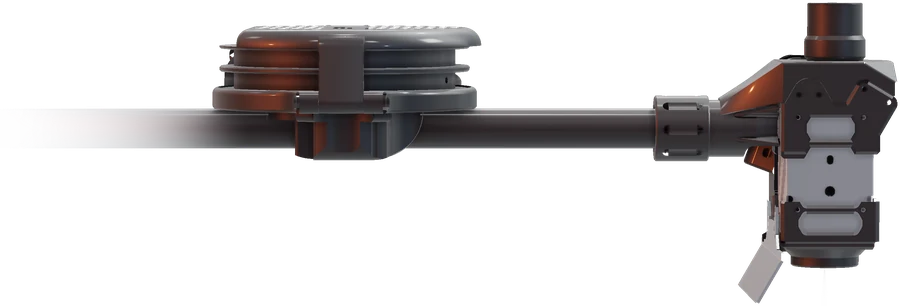
Measures each hole (depth, water height, collar position and toe RL) and uploads every record the moment it's captured, so nothing waits for the end of the shift.



Meet Pulse
A handheld blast-hole survey instrument. LiDAR measures routine holes in an instant; an integrated probe verifies the difficult ones, without changing tools.
LiDAR, RTK GPS and the probe live in one sealed head at the end of a carbon pole. The operator stays upright, 1.5 m clear of the hole.
A single LiDAR measurement captures hole depth without dipping, typing or switching tools.
Centimetre-level positioning compares drilled against design before charge and floor-control decisions are made.
Where water, mud or deviation blocks the laser, the probe drops on its cable to the toe, measuring full depth and the water column in the same workflow.
Average field performance in WA iron ore: a 1,500-hole shot done in under three hours with two operators.
The full workflow
The old dip-tape routine, then Pulse: RTK collar position, dry and wet holes, and the sync that follows every capture.
One person dips each hole with a weighted tape, reads it by eye and sprays the depth on the ground. A second follows with a tablet and types it in. 15–60 s a hole, and water is only estimated.
Satellites plus a base-station correction fix the collar's easting, northing and RL to centimetre level, so every reading lands on the right hole.
The LiDAR measures straight to the toe in an instant. No contact, no second tool.
The LiDAR stops at the water and flags the hole. The integrated probe drops on its cable to the toe: full depth and water column in 10–20 s.
Position, depth, water and time go straight to the Diptek cloud, then on to Orica BlastIQ, Maptek BlastLogic or your other mine systems through a direct API.
Continuous capture across the whole shot: up to 350 holes an hour.
9×
Complete surveys up to nine times faster than dip tape once walking back and tablet entry are counted. That means fewer hours on the bench, lower FTE cost, and data that's in the system before the shift ends.
Integration
Each record uploads from the bench as it's captured, then passes to the systems your mine already uses. No exports, no re-typing.
Measures each hole (depth, water height, collar position and toe RL) and uploads every record the moment it's captured, so nothing waits for the end of the shift.

Measured hole records delivered to BlastIQ automatically.
 BlastLogic
Designs in, measured records back, both automated.
Connectors built for other mine software.
BlastIQ is a trademark of Orica Limited. Maptek and BlastLogic are trademarks of Maptek Pty Ltd.
Compare
Specifications are indicative and subject to change.
Case study
A worked example for a large open-pit operation running two Pulse units in dry-hole conditions against a conventional dip-tape QA/QC crew.
Indicative only. Assumes ~40 holes an hour by tape (dipping, walking back and tablet entry), ~350 with Pulse, and 1,700 productive field hours per FTE a year.
Want the full business case, with your rosters and costs?
Request a site assessmentTrusted on site by









Get in touch
Questions about Pulse or how it would work on your site? Email or call us and one of our engineers will get back to you.